
Der Parti-Friedhof - as an agent of change
On Common Ground, Prof. Misselwitz, 2019
with M.B. & L.S.
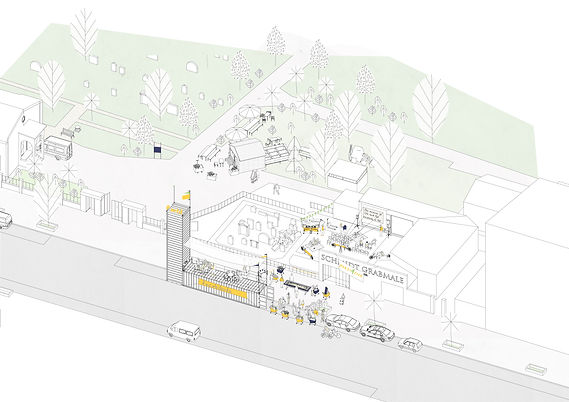
Method and tools for process-oriented planing strategies for the development of the cemetery Neue St. Jacobi in Berlin-Neukölln.
Situation 2019: Berlin has 220 cemeteries belonging to various faiths. 1,105 ha of the of the city's surface area is covered by cemeteries. However, due to demographic change and new burial cultures, the need for cemetery space has been radically reduced.
38 of the cemeteries in Berlin have already been closed but are still preserved and categories as cemetery space. In a city with dwindling space for development these areas are getting more and more attention. How could these spaces be used in the future?
The project Parti-cemetary examines how the repurposing of the Neue St. Jacobi can play a role in the future local neighbourhood development on Hermannstrasse in the northern district of Neukölln. In a very hands-on semester we worked closely together with the Prinzessinnengärten collective, the Natural Building Lab (TU Berlin), local administration, residents and other actors from the neighbourhood to formulate short- and mid-term strategies for the development of the cemetery.
We tried to actively respond to what will be a dynamic change and delivered inspiring methods, tools and ideas for an open-ended planning and participation process. A process that needs to respond to the people’s desire to be part of the change and the requirements for new spatial solutions.
The Parti(cipative)-cemetery is a place for everyone!
Process: The methodology of the project tried to emphasise on a new model for planning, architecture, and social work and created the Jacobi Code. These general guidelines and regulations can be transferred and used on other projects and hence used for other cemeteries that are being repurposed. They support municipalities or organisations in developing their own focal points for their local culture and specific situation. It makes it possible to join the voices of individuals and create a powerful choir that can make itself heard and be an essential part of the development of our cities.
The project describes the transformation of a place from a burial ground to a new quarter of desires. Simultaneously long-term meaningful, effective, and generally valid strategies for urban planning and planning and development processes emerge. The experimental participation and involvement process develops strong positions regarding neighbourhood and politics. Thus, it creates foundations and methods so that the knowledge of the many can shape the city.


